
“A white guy from Maine gets invited to speak with 80 incarcerated men in Virginia about leading with love.”
What could possibly go wrong?
That was the voice in my head as I prepared for my visit to Lawrenceville Correctional Center. My friend Sam Harris had invited me to take part in I OWE MORE, a men’s group he started while serving nearly 25 years inside. I wrote about the lead-up to this visit in my last post, “There Are Two Kinds of Prisons.”
The room was primarily Black men. I am a white man who has never been arrested, let alone been inside a prison. My lived experience couldn’t be more different from theirs. And Sam wanted me to talk about love in action.
I said yes. And then I thought, “WTF did I get myself into...”
Walking Through the Gates
The day arrived. December 22nd. I drove to Lawrenceville with Sam and the pastor of his church Justin Goodman. Sam still goes back regularly to help facilitate the group. He invited Justin and me to join. This was the first time either of us had been inside a prison.
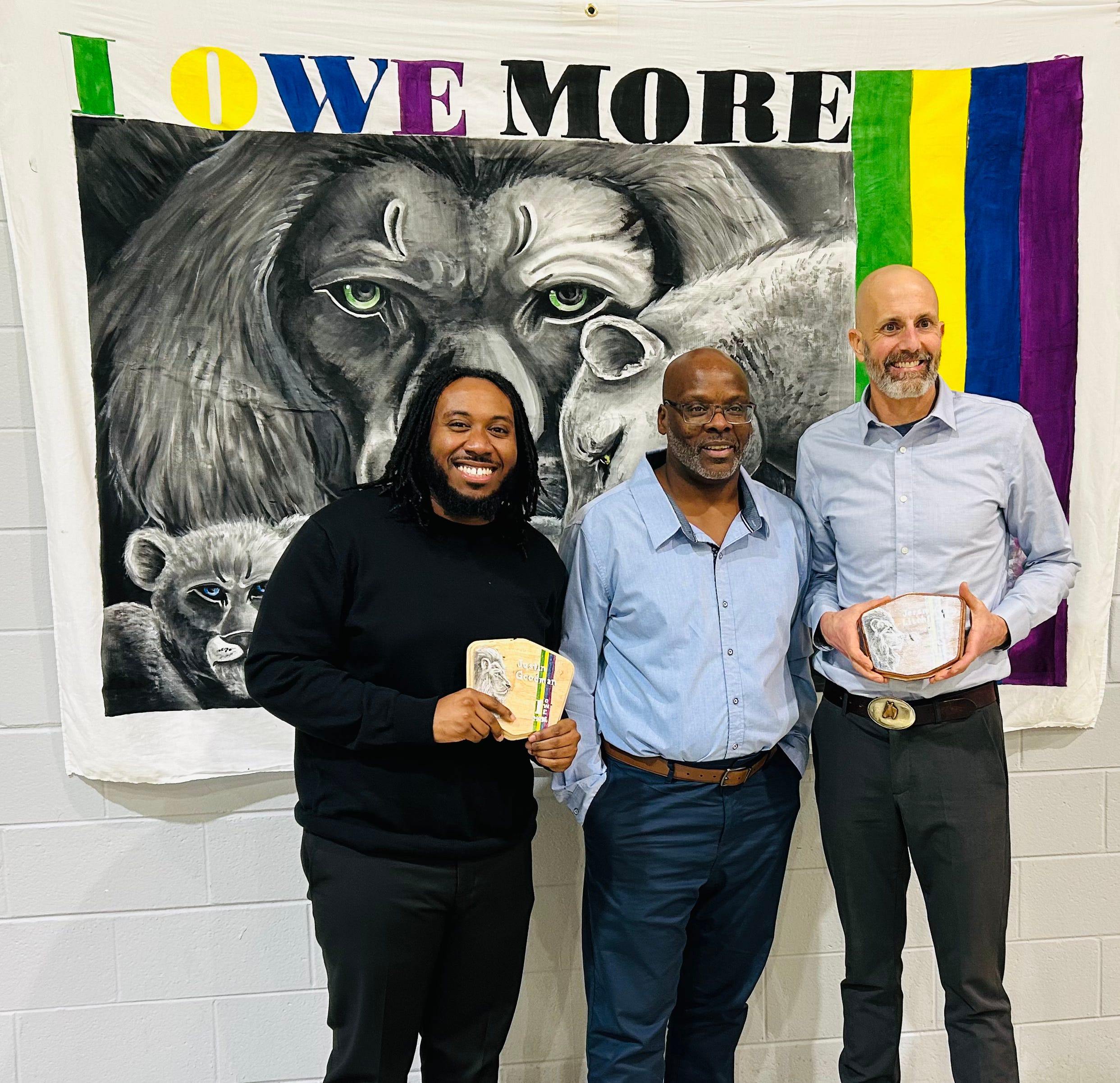
When you walk into a prison, everything about the process reminds you that you are entering a different world. The security checks. The gates. The sounds. The weight of the place.
I kept thinking about what I could possibly offer these men. I’ve given talks to hundreds of executives and CEOs. This felt harder.
The Room
We walked into the room and what I expected was hardness, guards up, suspicion of the outsider.
What I found was 80 men who had chosen to show up on a Monday to do inner work. Men being vulnerable in a place that doesn’t reward vulnerability.
At one point, one of the facilitators asked the group a question: What do you still need to work on to make sure you stay home when you get out?
One man shared that he’s working on not “checking” people. When someone says something that feels disrespectful, his instinct is to confront it. To make sure they know he saw it. He said that habit has gotten him in a lot of trouble. It’s a big part of what landed him in prison. He’s learning to take a breath. To let things go.
A few more men spoke and then one raised his hand. He said, “What do I need to do? I don’t know. What do I need to learn? I don’t know. What do I need to change? I don’t know.”
He wasn’t being dismissive. He was being honest. He was admitting, in front of 80 other men, that he didn’t have it figured out. As he said, “That’s why I’m at this group.”
I thought about how hard that is for men, anywhere, to admit they don’t know. To show up without the answers. But in a place where strength and stoicism are survival strategies, this man and all these men, are choosing vulnerability. That isn’t easy.
These men weren’t performing transformation. They were doing it. In real time. In front of each other.
The Coffee Cup
Sam had asked me to share something about love in action. I told them a story.
“Imagine you’re carrying a cup of coffee through a crowded room. Someone bumps into you. Coffee spills. Why did you spill the coffee?”
I gave them time to think. And then I said, “Most people will say: because someone bumped into me.” I could see heads nodding as I said that.
I then went on, “But the real answer is because that’s what you were carrying. If you’d been carrying water, you would’ve spilled water. The bump didn’t create what spilled. It revealed it.”
I could see smiles in the room. They were starting to understand where I was going with the story.
I went on to say, “In here, you’re going to get bumped. Every day. A look. A comment. A rule. A memory. A bad night’s sleep. The question isn’t whether you’ll get bumped. The question is what you’re carrying when it happens.”
“The fact that you’re all here doing this work tells me you’re trying to change what you carry. Moving from fear toward love. From control toward connection. From dominance toward something more like purpose.”
After the session, men came up to thank me. Not because I said anything brilliant. But because showing up meant something. It showed them that people on the outside care. That there’s love out here for them.
That surprised me. I came thinking I had nothing to offer. What I learned is that sometimes presence is the offering. It goes back to what I learned from Chris Lombard and his work with horses, presence is the first step toward love.
Meeting Tremayne
After the session, a man approached me.
“I made it,” he said. It was Tremayne.
A few months earlier, I’d been at the Returning Citizens Luncheon in Virginia and bid on a painting in a silent auction. It was called “Mother Earth,” and something about it pulled me in. I won it. When I got home, I reached out to the artist through a prison communication app called JPay. I wanted to thank him for the beauty he’d put into the world.
We’ve been exchanging emails ever since. I mentioned I was going to Lawrenceville but didn’t realize he was there. He asked which program I was visiting and said he’d try to come. We ended up talking for close to 30 minutes.
I’ll share more about Tremayne and our growing friendship in the next piece.
The Pattern I Keep Seeing
Here’s what struck me most about that day. These men aren’t just working on themselves. They’re building things to help others heal.
Sam started I OWE MORE while he was still inside. His cellmate Casey kept it going after Sam was released. Today it’s the longest-running inmate-created and inmate-led program at Lawrenceville. Tremayne started Colorful Transformations, a program I will talk more about in my next piece. These men are doing the work to free themselves from fear. Then they are turning around and creating space for others to do the same.
I’ve seen this pattern before.
At the Returning Citizens Luncheon last September, I walked into a room expecting hardness. What I found was one of the most love-filled spaces I’ve ever been in. Men who had served a collective 3,000 years in prison, embracing each other, celebrating each other’s growth, welcoming strangers like me to their table.
In my Campfire Conversation with Elmer Moore, we talked about how connection is the most powerful currency.
Kerem Durdag said it differently in our Campfire Conversation, “Physical proximity is our essential oxygen.”
I think what I witnessed at Lawrenceville is what happens when people free themselves from the fear prison. The one I wrote about in my last piece. The internal prison that can follow you anywhere.
When you start to free yourself from fear, something opens up. You can connect and form real community. Community creates space for vulnerability. Vulnerability allows healing. And healing has this way of extending outward. It doesn’t stay contained. It spills over into the people around you.
What spills out of you when you get bumped depends on what you’re carrying. These men are working to carry something different. And then they’re helping others do the same.
What’s Sticking with Me
I went into that prison thinking I had nothing to offer. I left realizing that my presence was enough.
And what really stuck with me is that more healing work might be happening inside those walls than in most spaces on the outside.
That’s not a statement about the prison system working. It’s not. The system is broken. But despite that system, some men are choosing love. They’re building community. They’re creating programs. They’re doing the work.
And it makes me wonder: What would it look like if more of us on the outside did the same?
Learn more about the adventure at www.heart-strong.org
This is the second piece in a short series. Next, I’ll introduce you more fully to Tremayne and the friendship that started with a painting. After that, I’ll explore what it actually costs to stay connected to the people you love when you’re behind bars.
Incredible story. The contrast between expecting hardness and finding vulnerability is powerful. I've worked with reentry programs and one thing I noticed is how much harder it is for men to admit they dont know something compared to showing anger or strength. The coffee cup analogy is brilliant because it shifts the focus from blaming external bumps to taking ownership of whats inside.
Good insight. Interesting read…