
This is the third and final story in a series about surfing, Costa Rica, and what happens when you stop extracting from the places you visit and start building relationships with them. The first post was called “What Makes You Feel Whole?” The second, “A Tale of Two Surfers.”
Last year, my wife Becca and I spent four weeks in Malpais, Costa Rica. We stayed pretty secluded. I surfed. We ate healthy. We had an amazing time. But we didn’t really interact with other people.
I left a better person. I thought more clearly. I acted more kindly. I was a better version of myself. And when we got home, that bothered me because it felt extractive. I had taken all this positive energy from the place, the ocean, the jungle, the rhythm of the lifestyle, and brought it home with me. But I didn’t leave anything behind. The energy only flowed one way.
This year, we committed to seven weeks. And before we even got there, I made a decision. I wanted to find ways to give back to a place that had given so much to us.
I started researching volunteer opportunities. I came across an environmental organization called Casa Pampa.1 They had everything from beach cleanups to farm work to opportunities with local schools. All things I was interested in. So I reached out.
I got a message back from the founder. His name is Nahuel.
Nahuel is Argentine. He studied organic agriculture at the University of Buenos Aires at a time when nobody in Argentina was taking organic agriculture seriously. The only thing the market cared about was soybean production and pesticides. Nahuel helped push for a course of study in organic agriculture at the university. By the time he left, future engineers had a path to study it.
After university, he was offered an executive job running a branch of an organic certifying company in Buenos Aires. He was 25. The office was in a historical building with marble floors. He would head downtown twice a week, wear a suit, take the subway to the financial district.
He said no.
Instead, he went to Mexico to surf. He came back after a year and decided, he’s not doing international commerce or organic certification or working in an office. And he left for Costa Rica.
He landed in Santa Teresa because there were waves. That was close to 20 years ago. Back then, there were maybe 200 families. There was no public water. There was nothing. Now there are over 2,000 families. It’s a different place.
Nahuel started a boutique hotel. His neighbor from the next door business was trying to compost but didn’t really know what he was doing. The composting started to smell. Nahuel got complaints from his own guests about it.
So he was in a position where he had to tell his neighbor to stop doing something that was actually the right thing to do. And he thought, I can solve this. Not just for my neighbor. For the whole community.
He started composting in the local school yard. He knew how to do it efficiently. He could handle a lot of waste in a small space. He taught business owners how to compost on their own properties. He taught the kids. And through the kids, he reached the families.
One of those kids was a girl named Genesis. Recently, Nahuel ran into her. She’s now 27 and works as an environmental engineer for the local government. He asked where she was from, expecting her to say San Jose. She said, no, I’m from here. You gave me classes in school.
That story says everything about the kind of work Nahuel does. He plants seeds. Sometimes literally. Sometimes in people.
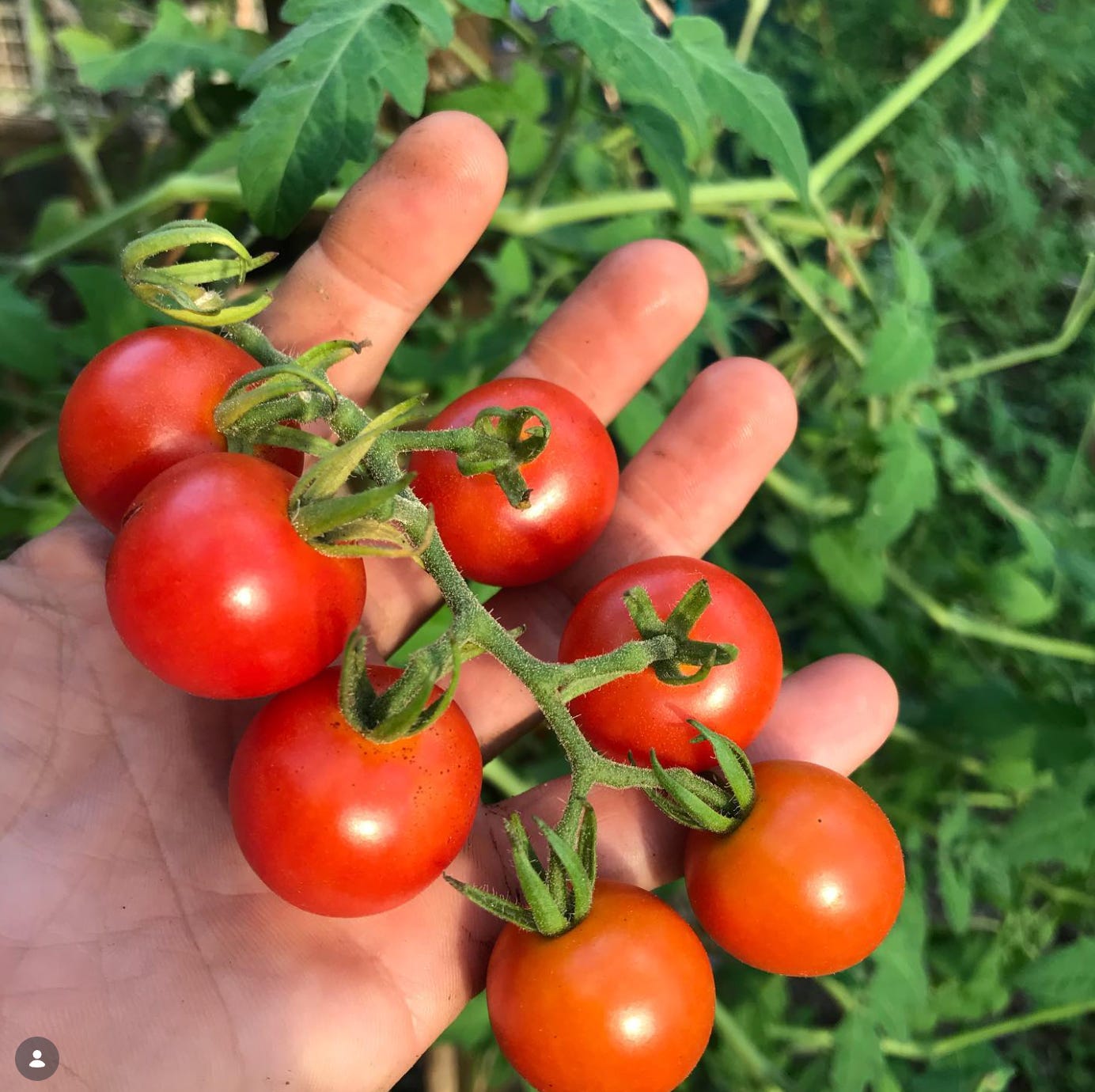
One afternoon, Becca and I went out to the farm to volunteer. There was a mother and daughter from Sweden with us. We picked tomatoes, cucumbers, fresh ginger, turmeric. We took it all home to cook with. It was great.
But I knew we had more to offer than physical labor. So I reached out to Nahuel and said, hey, when can we do this again? And I’d also love to sit down with you, understand your work, tell you about what we do, and see if there are other ways we can help.
We had coffee. Then a working session. Becca and I started helping him think through his purpose compass, aligning around vision, mission, and values. I’m putting together a brand voice guide for him so that when volunteers come in to help with writing or design, there’s consistency. He’s basically been funding the whole operation himself, and he’s trying to go after grants. So we’re helping where we can.
Then he sent me a flyer for a community fundraiser. Some local bands were playing. We never would have known about it. We went. It was awesome!
Then we started surfing together. Nahuel told me that when the swell shifts, it brings waves to the other side of the peninsula in Cabuya. He said it’s his favorite wave in the world. And he’s surfed all over. Argentina, Mexico, Pavones near the Panama border, which is considered the second longest left in the world. He said Cabuya, when it’s working, is one of the best.
He said, let’s go next week.
That’s how I ended up paddling out in the dark at 5 a.m. with Nahuel, catching waves by moonlight before the sun even started to rise. An experience I never would have had if I hadn’t pushed beyond just volunteering to actually build a relationship.
I told Becca at one point, I think I just met my Argentinian counterpart. We see the world in such a similar way. He’s a serial entrepreneur at heart. He sees a problem, he solves it. Once the resources are there to keep solving it, he moves on to the next one. His vision for Casa Pampa is about community, connection, and resilience. And his ultimate goal, like any good founder, is to put himself out of business. If the problems are solved, the organization doesn’t need to exist anymore.
The exchange of energy between us has been amazing. We’re giving him strategy support. He’s introducing us to experiences and community we never would have found on our own. Both of us are better for it.
One of my mentors, Michael Douglas, talks about energy through systems. How do we make sure energy isn’t just flowing one way? How do we make sure we’re not just extracting but also adding to the positive energy of a place?
That’s the question I keep coming back to.
Here’s another story. Last year, Becca and I went to a place called Indigena Café2 in Cabuya. It’s a bean to bar chocolate spot right near the entrance to Cabo Blanco National Park, the first national park in Costa Rica. They source all their cacao from indigenous communities near the Costa Rican-Panamanian border. The founder is an Italian guy named Gianni. The people who work there make you feel loved from the second you walk in.
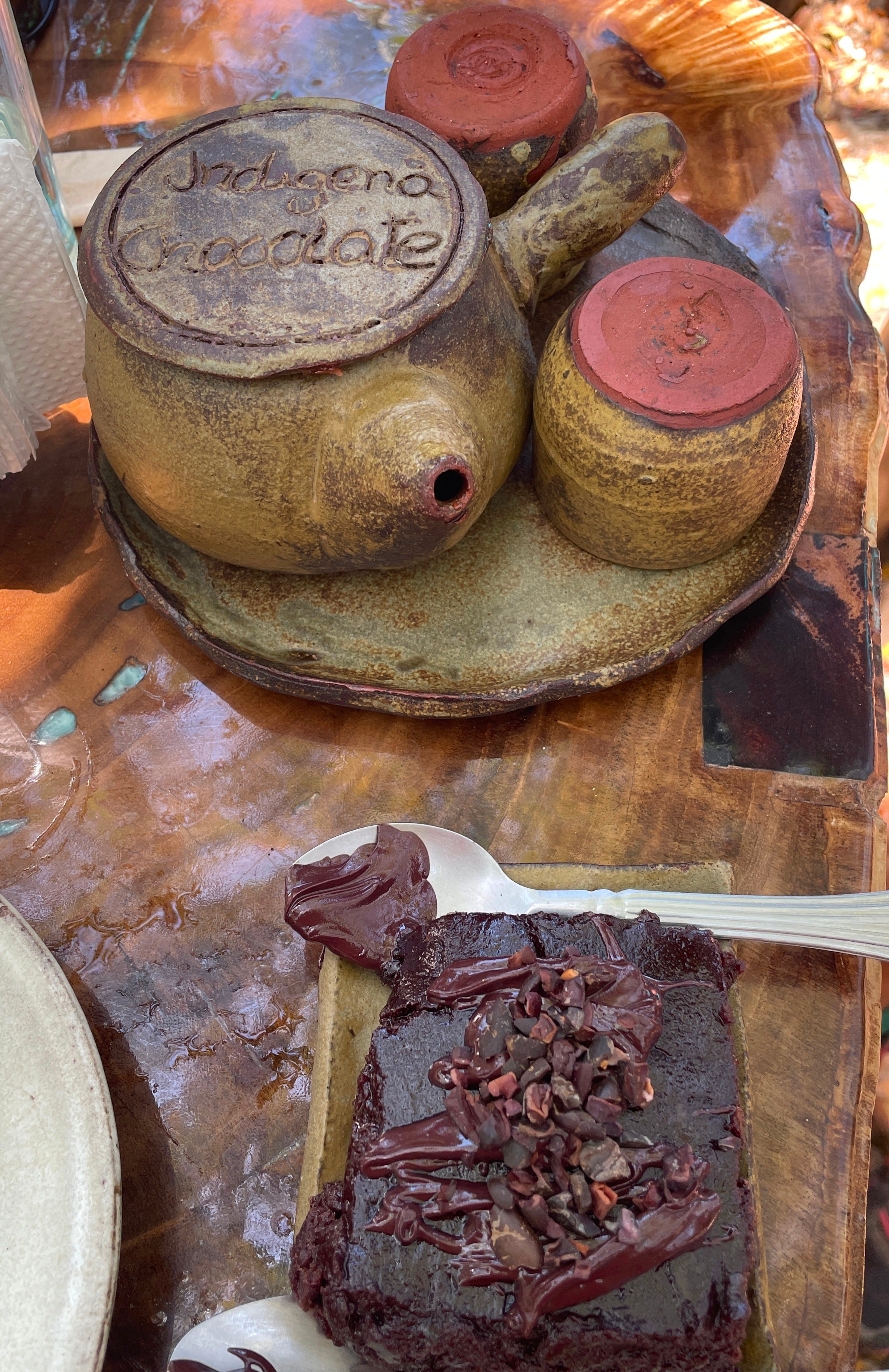
When we were there last year, we were lingering, waiting to meet someone. Gianni brought us out some cacao husk tea. The husks are a byproduct of the chocolate-making process. We loved it!
When we got home, we reached out to a bean to bar chocolate company in Maine called Bixby3 and asked if they had cacao husks. They did. Cacao husk tea became part of our daily ritual. No caffeine. Just this gentle energy from the theobromine. Every time we had it, we thought about Cabuya and Gianni and Indigena Cafe.
This year, we went back. We told Gianni the story. How he’d given us that tea, how it became part of our life back in Maine, how we think about his place every time we drink it. His face just lit up. He said, that warms his heart. That makes it all worth it.
These stories are what I’m starting to think of as regenerative exploration.
I’m deliberately not using the word tourism. Tourism feels like you’re touring a place. Just passing through. Travel still feels a little transactional. Exploration feels more like who I am and how I move through the world.
And regenerative means the energy goes both ways. It’s not just about leaving a place better than you found it, though that matters. It’s about building relationships that keep feeding both sides long after you’ve gone home.
Connection can be one way. I can connect with a place, take its energy, and leave. Relationships are reciprocal. The energy flows back and forth. Nahuel introduces me to something that changes my experience. I help him with something that moves his work forward. Gianni shares something with us on a random afternoon. A year later, we come back and tell him what it meant. And that fuels him to keep doing what he does.
I don’t have a framework for this. And I’m not trying to build one. I’m just noticing what happens when you stop extracting from a place and start being in relationship with it.
Something opens up that wouldn’t have otherwise.
This is the final post in a series from Costa Rica. The first was “What Makes You Feel Whole?” The second, “A Tale of Two Surfers.”
https://casapampa.com/
https://indigenachocolate.com/
https://bixbychocolate.com/