
This is the third post in a series looking at healthcare through the lens of love and fear. First, I shared what a doctor friend told me about her training, how fear was baked into everything from day one.1 Then I dug into the data, what a fear-based system actually produces in terms of outcomes and spending.2
Now I want to talk about my own experience of fear and the healthcare system.
When I was 29, I left my job to start a company. It was called Atayne. It was a running and cycling apparel company. My goal was simple and rather ambitious: create a model for the apparel industry that didn’t exploit people and the planet for the sake of profit.
When I made the leap, one fear loomed larger than all the others.
It wasn’t the fear of failure. And it wasn’t even the fear of running out of money. I could survive without a paycheck for a while. I had savings. I had skills. I had people who believed in me.
The fear that almost stopped me was health insurance.
I could get by without making money. But if something catastrophic happened medically, it could have ruined me financially. One bad diagnosis. One serious accident. One of those hospital bills you hear about that wipes out a family’s savings in a single stroke.
That fear almost kept me from pursuing my dream.
But as I have been diving into the healthcare system and thinking about my own personal experience, I’ve thought a lot about how many people don’t make the jump.
According to a West Health-Gallup survey, one out of every six adult workers in the United States is staying in a job they might otherwise leave because they’re afraid of losing their employer-sponsored health insurance.
One in three workers say they’d be at least somewhat likely to leave their current job if health insurance weren’t a factor. More than one in four say they’d be likely to start their own business.
Researchers have a name for this. They call it “entrepreneurship lock.”
A Harvard Business School study found that when the Children’s Health Insurance Program expanded, self-employment increased by 12%. Parents who no longer worried about losing coverage for their kids could finally take the risk of starting something.
RAND found that self-employment rates jump significantly when workers turn 65 and qualify for Medicare.
Think about that. People are waiting until they’re 65 to follow their dreams because they’re afraid of what might happen to them medically.
I think about all the creativity, innovation, and love that never enters the world because of this. The businesses that don’t get started. The art that doesn’t get made. The risks that don’t get taken. The callings that don’t get followed.
All because a fear-based system has taught people to be afraid.
I’ve been self-employed going on almost 20 years. I don’t have employer-sponsored health insurance. So, I’ve had to figure something out.
Here’s a breakdown of what I’ve pieced together.
I’m part of a health cost-sharing community called Sedera.3 It’s not insurance. It’s a group of people who pool resources to help cover major medical expenses. It handles catastrophic stuff.
For primary care, I have a direct care provider, Dr. Oren Gersten.4 I pay him a monthly fee, and in return, I get something that feels almost radical in the American healthcare system: a relationship.
When I go see him, we talk for an hour. Not fifteen minutes. An hour. He knows me. He knows what’s important to me. He knows my life, not just my symptoms. When I need something, I can text or email him directly. No gatekeepers. No scheduling nightmare.
I do a full panel of labs once a year. He charges me his cost. No markup. If you’ve ever seen what labs cost through the traditional system, you know what a difference that makes.
His incentive is to keep me healthy. Not to bill procedures. Not to run tests. Not to refer me to specialists who will run more tests. He makes his money by providing a service, not by maximizing volume.
He cares for me as a whole human. Not as a collection of symptoms waiting to be coded.
I love the care I get. His is an amazing doctor. And I think part of the reason is he put himself into a system where he can lead with love and not be controlled by fear.
The tradeoff of all this is I pay for everything out of pocket. And it adds up.
It forces me to be intentional in ways I wouldn’t have to be if I had traditional insurance. When I get a running injury, I don’t typically go to physical therapy. I take care of it myself. Last year in Costa Rica, I wiped out surfing and the fin of my board hit my foot. I probably broke or fractured something. I didn’t do anything about it.
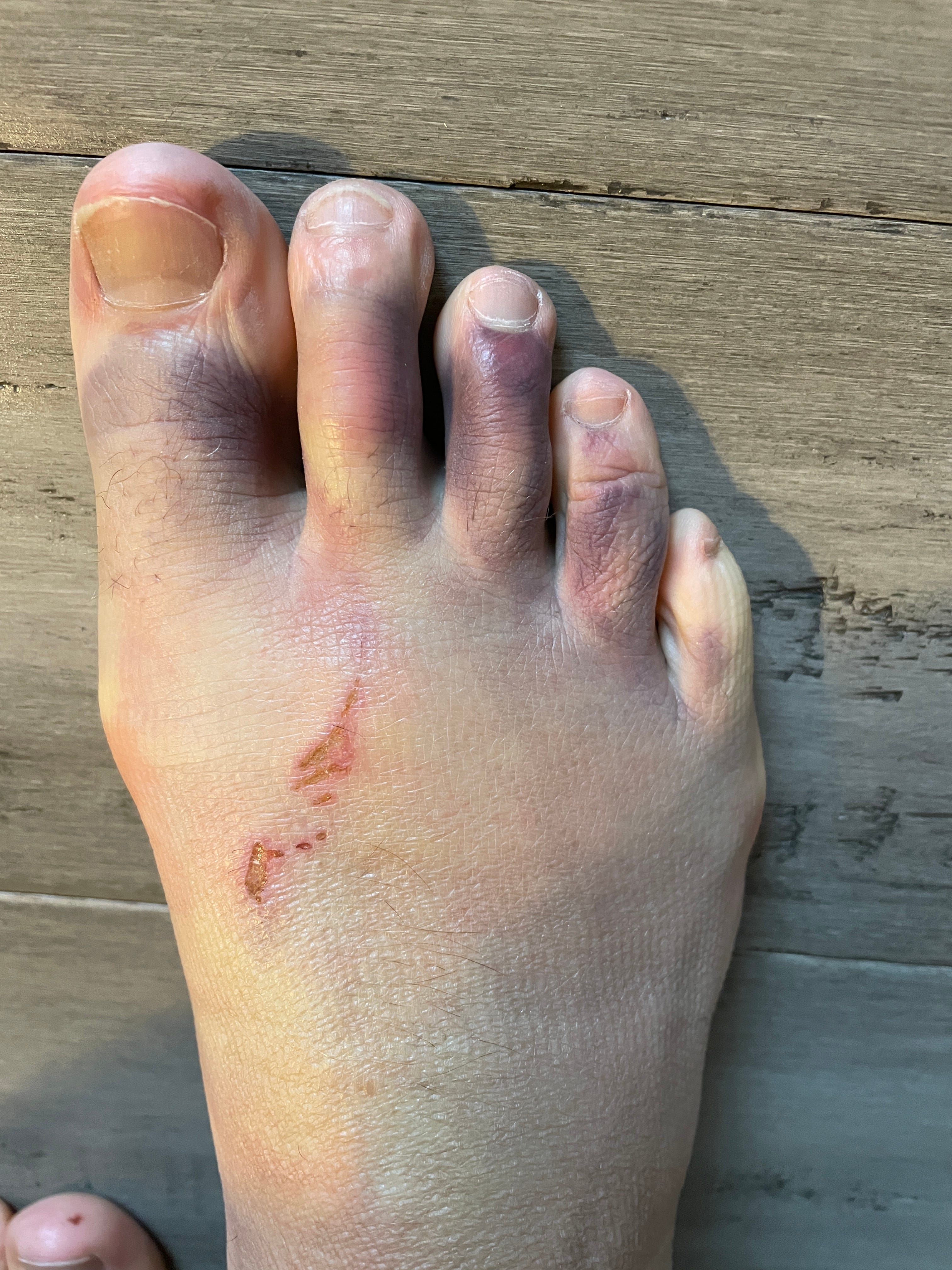
For years, my liver enzymes have been elevated. I’m finally seeing a specialist about it in a couple months. Specialists are expensive.
These are the calculations you make when every medical decision comes directly out of your pocket.
My personal situation does give me a bit of hope. Within a fear-based system, people are finding ways to build something different.
My doctor has opted out of the billing-driven model. He’s created a practice where the incentive is aligned with actually keeping people healthy. Where he has time to listen. Where he can know his patients as humans.
It’s not perfect. It’s not accessible to everyone. But it shows what’s possible. It shows what care can look like when it’s not organized around fear.
With all of this, I keep coming back to a question: How much love, beauty, creativity, and innovation never enters the world because fear-based systems instill and perpetuate fear in people?
I think about the person with a business idea who stays in a job they hate because they can’t risk losing coverage.
I think about the hobbyist artist who never makes the leap because the what-ifs are too terrifying.
I think about the parent who doesn’t take the chance on something new because the stakes feel too high.
Fear-based systems don’t just fail to serve us. They actively hold us back. They keep us small. They keep us tethered to choices we wouldn’t otherwise make.
And somewhere in there, all the things that those people might have created, all the love they might have brought into the world, stays locked inside.
Those are costs that don’t show up in any spending report.
This is the third story in a series exploring healthcare through the lens of love and fear. The first post, “Trained to Lead with Fear,” looked at how doctors are trained. The second, “What Does a Fear-Based Healthcare System Produce?”, examined the data around healthcare outcomes. In the final post, I’ll step back and look at the bigger picture. Healthcare. Prisons. Education. Commerce. What if our most critical systems are designed to keep us afraid? And what might it look like if they were built on love instead?
Sources: West Health-Gallup Healthcare in America Report (2021), on workers staying in jobs for health insurance, Harvard Business School study on CHIP expansion and self-employment, RAND Corporation research on Medicare eligibility and self-employment rates
https://adventure.heart-strong.org/p/trained-to-lead-with-fear
https://adventure.heart-strong.org/p/what-does-a-fear-based-health-care
https://sedera.com/
https://www.winterpinedpc.com/
Thanks Jeremy. Please keep an eye 👁️ on your liver. I’d like you around a lot longer than me. Your loving much older aunt. ❤️
It is rather odd when we compare the traditional US system that ostensibly provides health (and why skeptics call it the “sickcare” system) to how much of the rest of the world operates.
When people do step out as entrepreneurs in the US, they may often neglect their health to focus on what they’re building. Some get lucky — either with their org, health, or both. I’m guessing the majority end up paying a heavier price later for delaying the important, preventive stuff (like a colonoscopy) because it was expensive and inconvenient.