
I was recently listening to an older episode of the Man Enough podcast. The guest was Alok, a gender non-conforming internationally acclaimed poet, comedian, public speaker, and actor. Something they said struck me. They were talking about anti-suffrage postcards from the early 1900s. Postcards made by people who were afraid of what would happen if women got the right to vote.
I had to see these for myself, so I went looking.
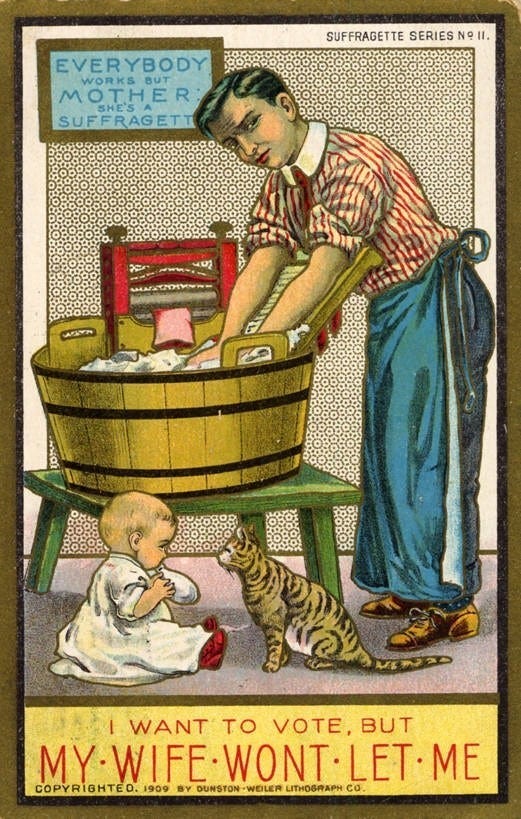
One showed a man doing laundry with babies at his feet. The caption read, “I want to vote, but my wife won’t let me.”
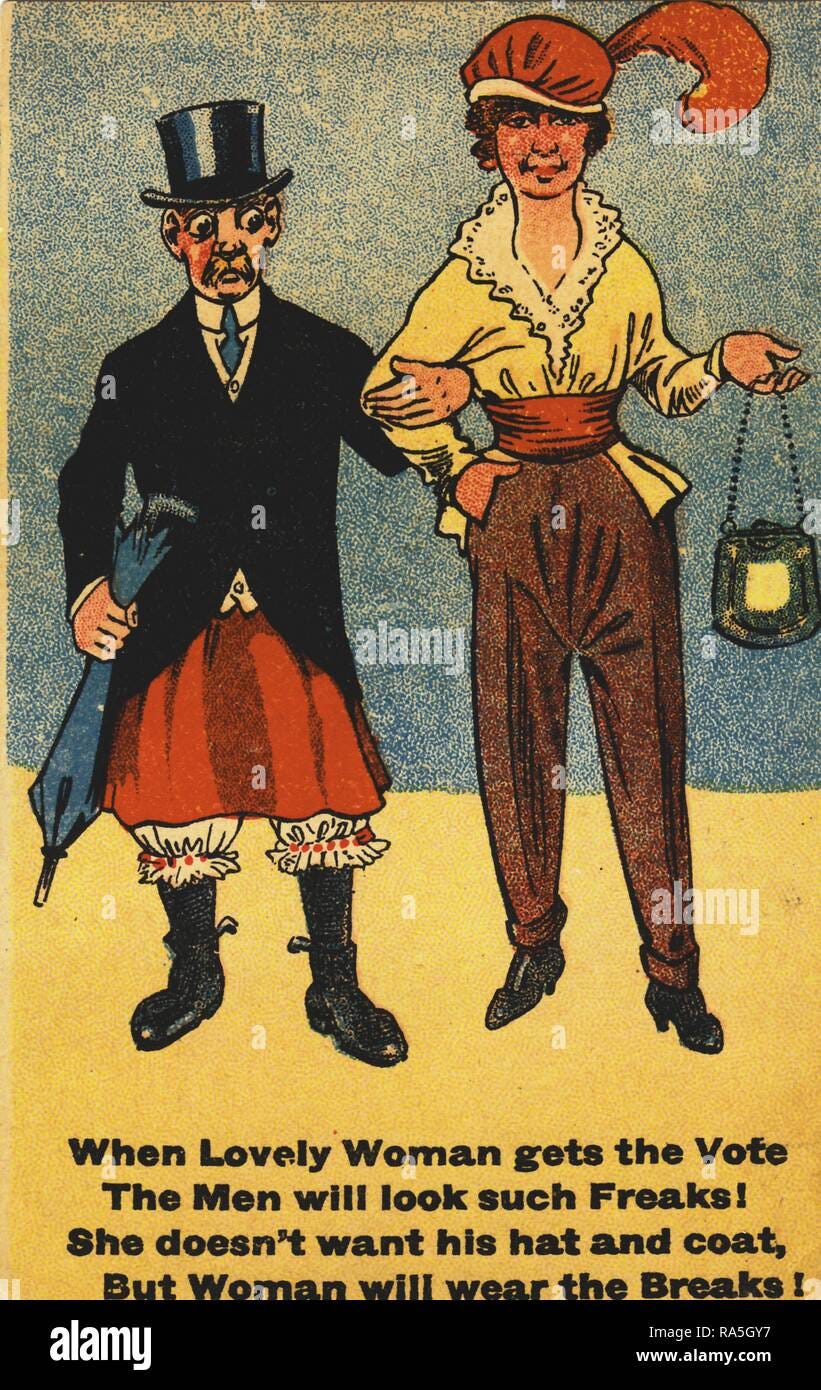
Another had a woman dressed as a man. And a man dressed as a woman with the caption, “When lovely woman gets the right to vote, the men will look like such freaks! She doesn’t want his hat and coat, but will wear the breaks!” Breaks is likely referring to breeches or pants, but they were playing with rhymes.
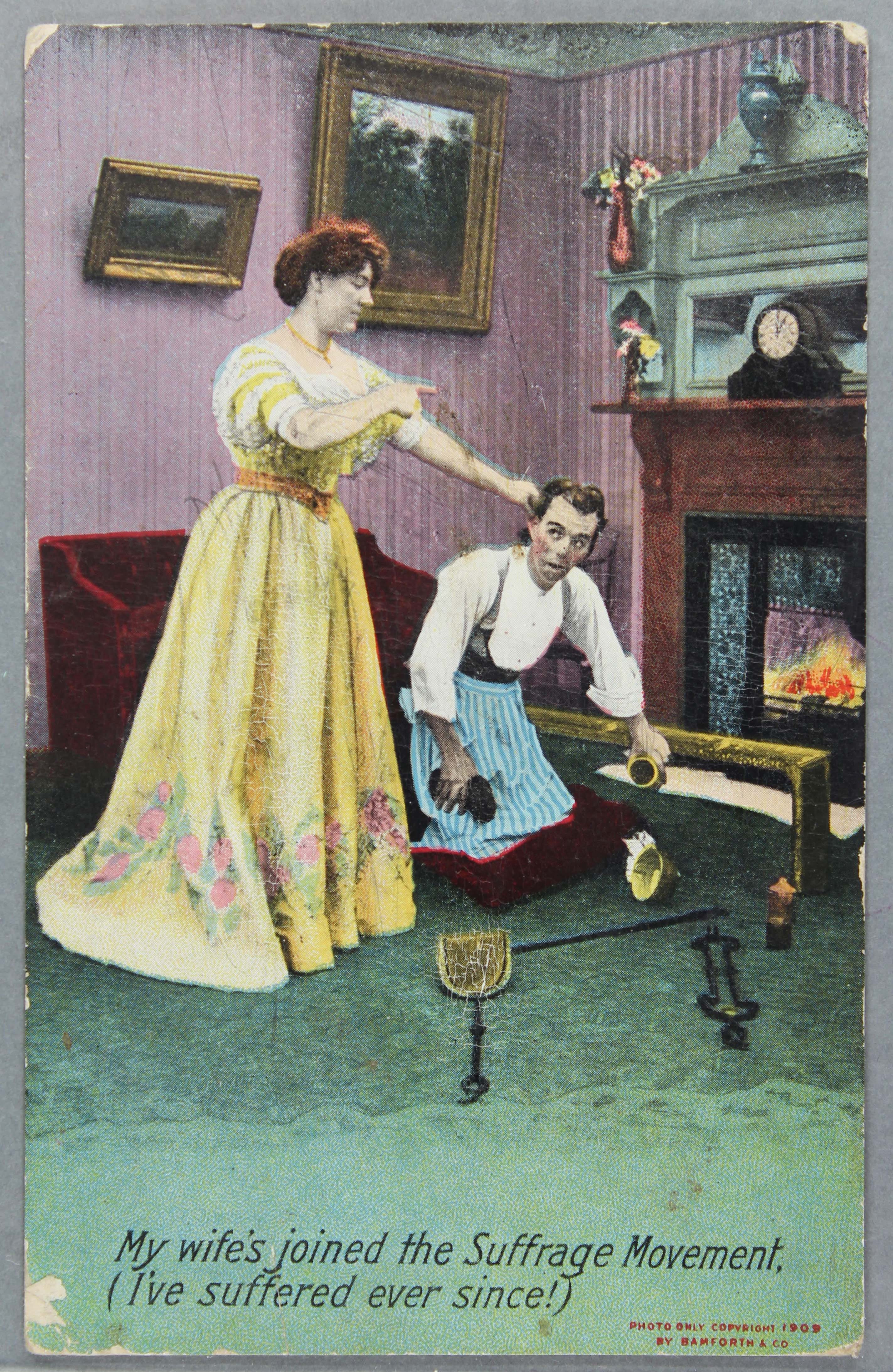
And a third showed a man being ordered around by his wife and thinking, “My wife’s joined the Suffrage Movement. I’ve suffered ever since.”
It’s easy to look back now and think, Seriously? This is how people reacted to women wanting to vote?
But those postcards weren’t a one-time event. They were a playbook. And people are still running the same plays. Today, we don’t see postcards. We see political mailers. We see ads. We see memes.
Here are a few modern-day versions.
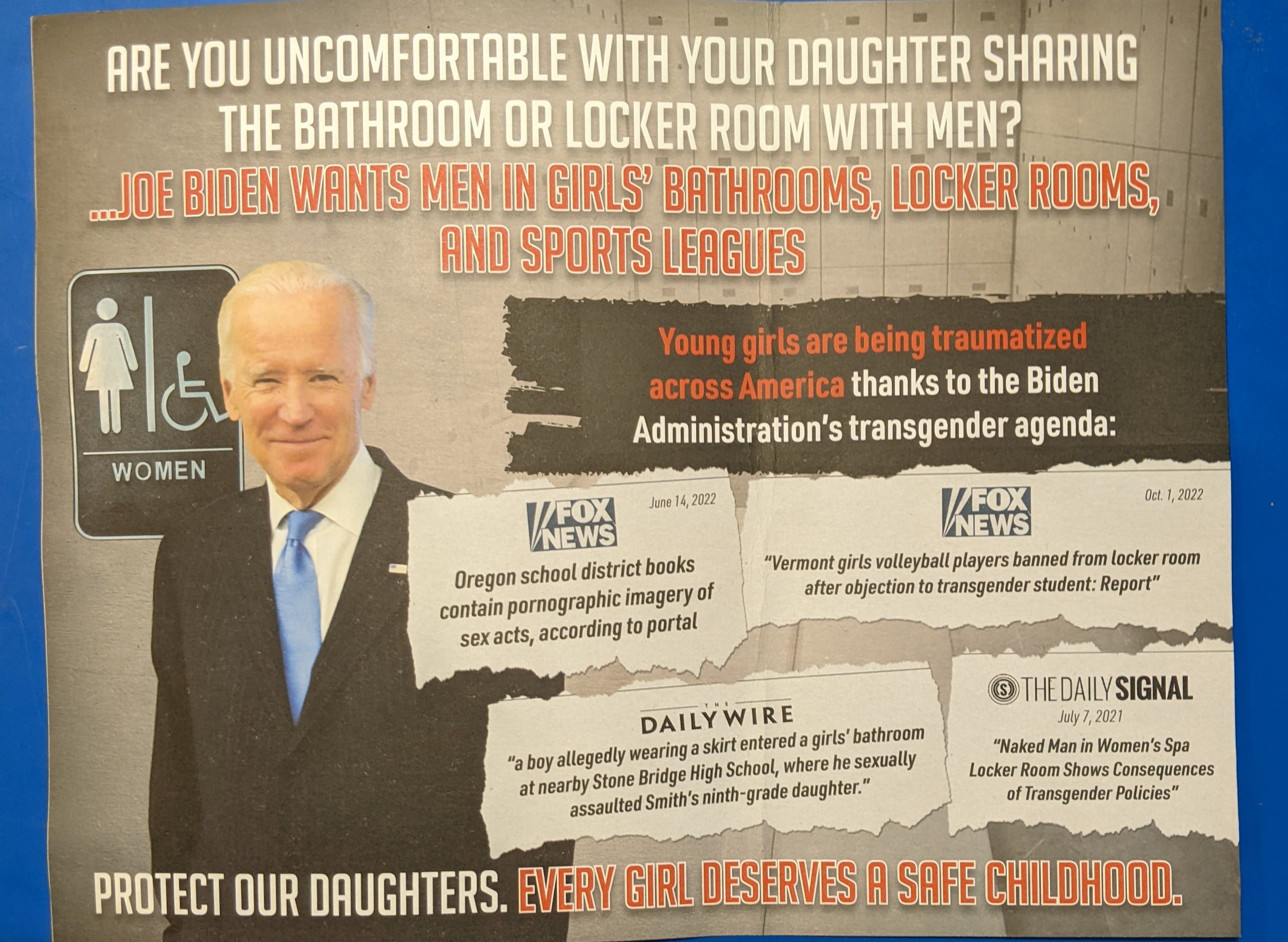
One claimed that letting transgender kids use bathrooms that match their identity would put girls in danger.
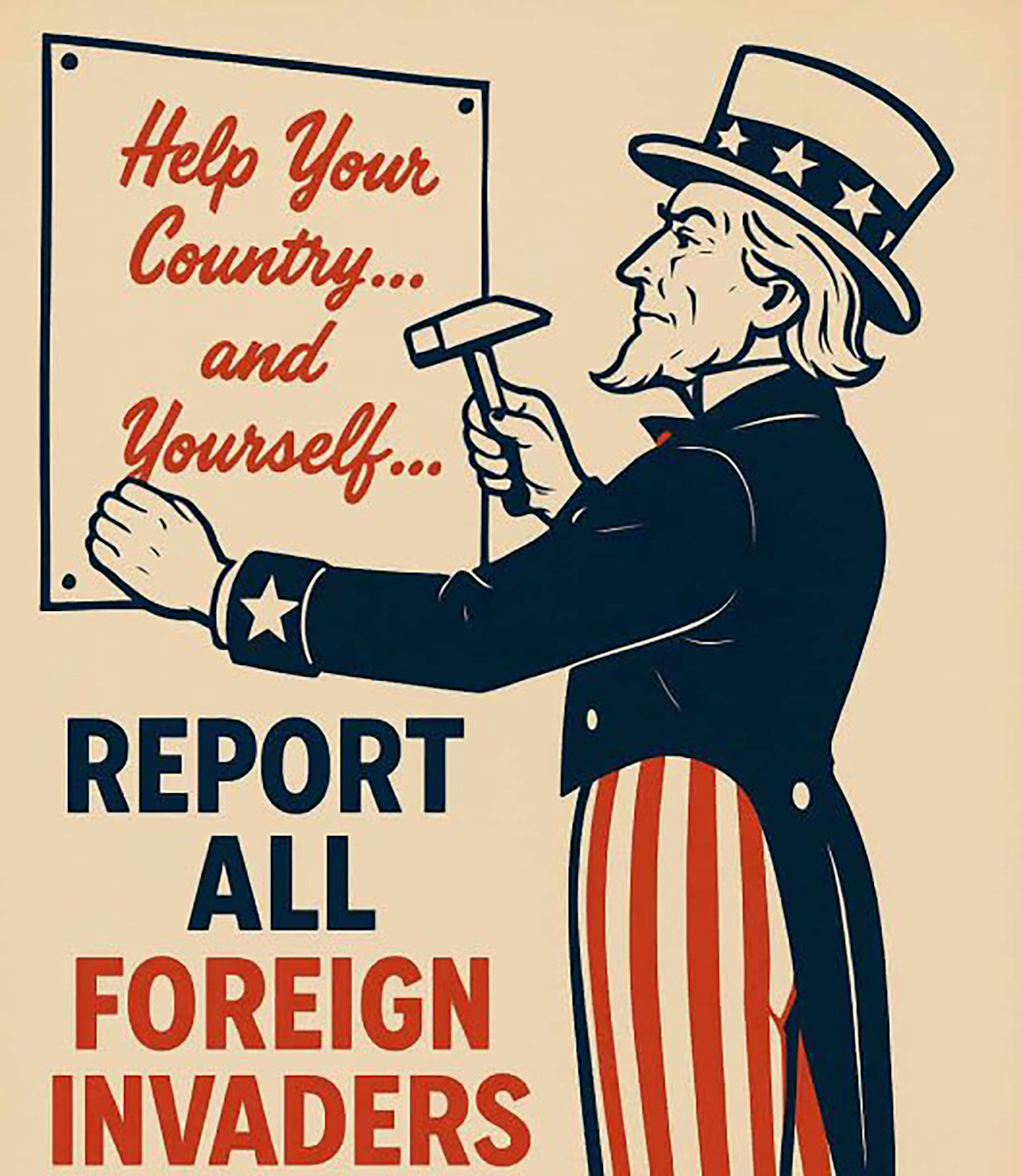
Another borrowed a vintage Uncle Sam to warn Americans to “report all foreign invaders.”
The third mocked climate change concerns by putting Al Gore’s face on a frozen body and flipping facts about polar bears.
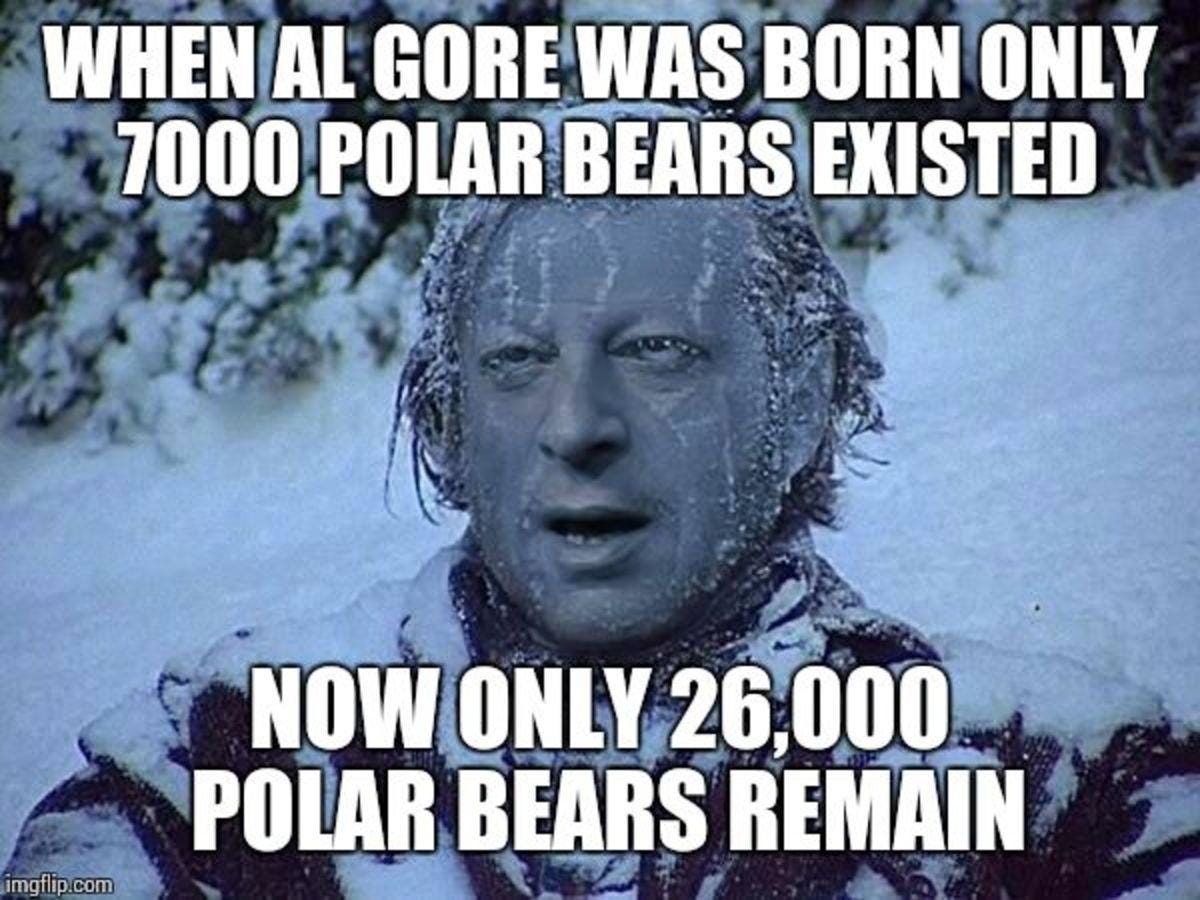
Different issues. Same tactic. They each tell a story rooted in fear: If they rise, we fall.
It’s the same fear those men a hundred years ago were trying to make visible in cartoon ink. The fear that if someone else gains freedom, I lose mine. That sharing power means giving it up entirely.
I don’t want to shame the people who believed or believe these stories. I want to understand them. I want to understand the fear that is sitting behind those stories.
A hundred years from now, will people look back at these images the way we look at those postcards?
Will they wonder how anyone believed that inclusion was a threat?
Will they question why we thought it made sense to take and take from the planet?
Will they shake their heads at the idea that freedom had to be rationed?
Maybe the point isn’t to judge those who came before us. Or the ones still among us. Maybe it’s to get honest about the fear we ALL carry.
To understand that fear.
And to begin to work together to let it go.
Learn more about the adventure at www.heart-strong.org
Interesting…
Fear of losing when we don’t know what good the future can bring? We cling to today as if change isn’t constant.
Example: With the internet, people feared that lots of jobs would be lost. Yet no one could predict all the new jobs that would be created.
Fear constrains our creativity and ability to see new possibilities. And frankly, will kill us earlier with the overdose of cortisol and other body-based chemicals designed only for truly life-threatening circumstances.
Postcards of fear do the same. (As does the social media doom scrolling and fixation on sensationalized news that doesn’t reflect the actual balance of good in the world.) What we consume matters, vitally.